If you feel you or your family could be helped by talking through a mental health issue, or you feel that psychotherapeutic input might be right for you, then please do get in touch.
Our clinicians are available to talk through your concerns over the phone and can advise as to whether therapeutic help might be beneficial. We offer appointments throughout the day and run evening clinics throughout the week, including Saturdays. We are also able to offer sessions via Zoom where we feel this is clinically appropriate.
Prefer to phone us first? Call us on 0131 5579894
Your details
Therapy Types
Family Therapy
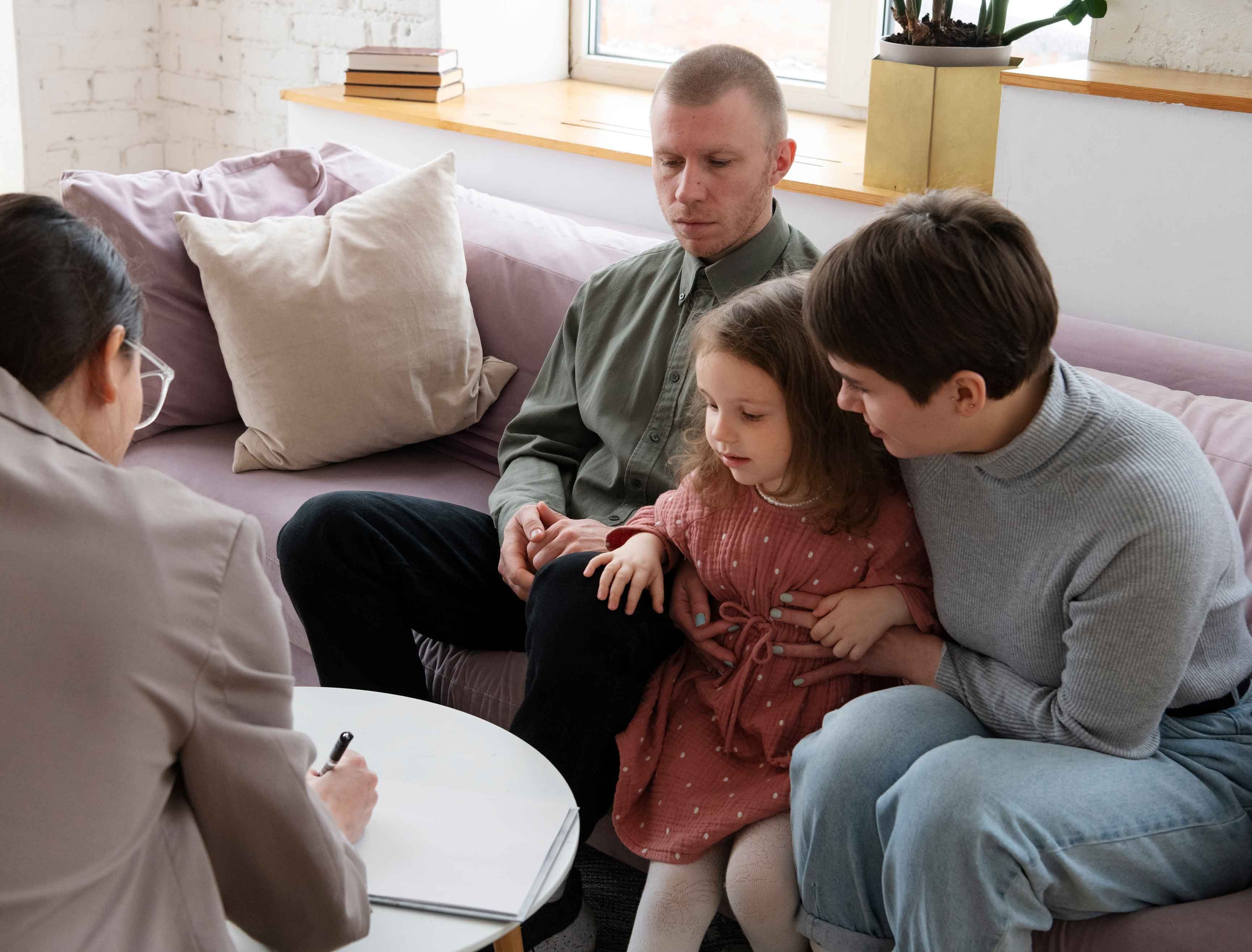
Family Therapy focuses on relationships rather than individuals, helping families understand patterns of interaction that contribute to distress.
It provides a structured, reflective space where children, parents, and other family members can think together about difficulties and strengths. The aim is to improve communication, reduce conflict, and support healthier emotional relationships within the family system.
What to Expect
Family therapy sessions usually involve several family members meeting together with the therapist. The focus is on how difficulties are experienced and maintained within relationships, rather than on locating blame in any one person. Sessions explore communication styles, emotional responses, family roles, and patterns that repeat under stress. The therapist helps the family slow things down, notice unspoken assumptions, and experiment with new ways of relating. Depending on need, sessions may include the whole family, subgroups, or occasional individual meetings. Family therapy is collaborative and respectful, aiming to strengthen understanding, flexibility, and emotional connection over time.
Evidence Base & Suitability
Family therapy has a strong evidence base for a range of child and adolescent difficulties, including behavioural problems, emotional distress, eating disorders, and the impact of trauma or illness on family functioning. Research indicates that systemic approaches can be particularly effective where difficulties are embedded in relational patterns or when individual-focused therapy alone has not been sufficient. Family therapy can be helpful during periods of transition, crisis, or conflict, and where communication has become strained or polarised. It may be less suitable where one family member is unwilling or unable to engage, or where intensive individual work is the primary requirement.
“In family therapy, we’re interested in how everyone’s experiences make sense within the wider family context. By thinking together about patterns and pressures, families often discover new ways of understanding each other and responding with greater empathy and flexibility.”